Cane Bay Middle might have some inventors in the making…
This lesson was a homerun for seventh grade English/language arts standards – and even tied into what fifth graders are currently learning in their own English/language arts lessons.
Modeled after the popular TV show “Shark Tank”, Rebecca Croskey’s students were tasked with taking what they have learned about persuasive writing and come up with an idea that would solve a problem in the world. The ultimate goal was to use persuasive techniques to convince someone to buy in to their ideas.
The seventh graders got to be the entrepreneurs, and the fifth graders got to be the angel investors in this hands-on assignment that blended both grade levels and tested students’ understanding on rhetorical appeals.
Who: Seventh grade English/language arts teacher Rebecca Croskey and her Gifted and Talented students, as well as fifth graders
Where: Cane Bay Middle
What: “Shark Tank” is a business reality show that shows entrepreneurs making business presentations to a panel of five angel investors, called “sharks”, who decide whether to invest in their companies. The entrepreneur could potentially land a handshake deal on the show if one of the sharks is interested. However, if all of the panel members opt out (“I’m out”), the entrepreneur leaves emptyhanded.
The fifth graders ventured over to the middle school to listen to the seventh graders pitch their ideas and serve as the “sharks” in this lesson. The fifth graders were given Monopoly money that they could give to a seventh grader if they wanted to “invest” in their product.
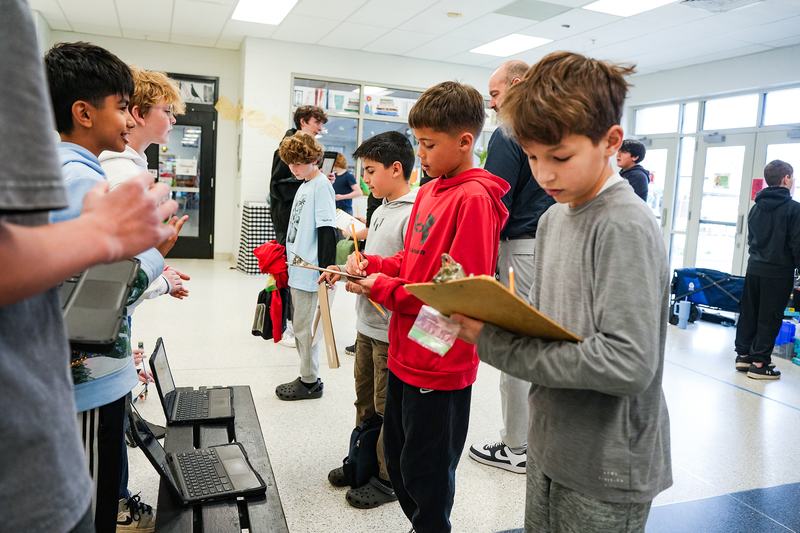
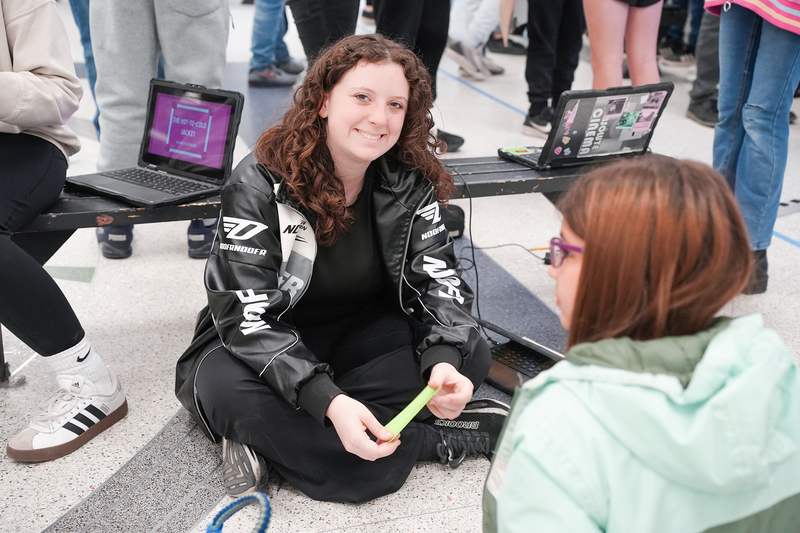
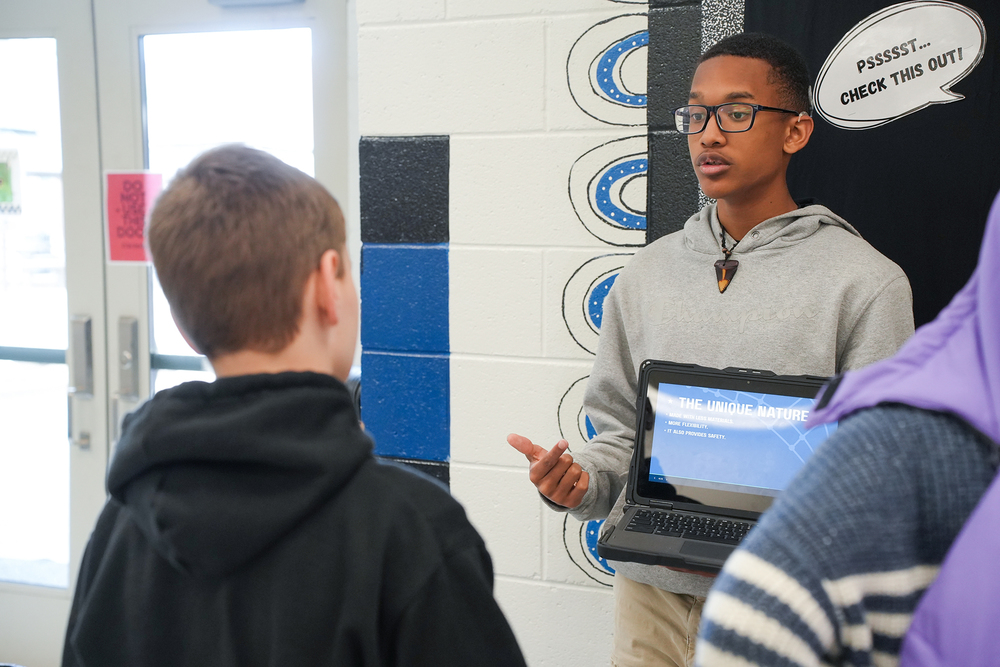
Croskey’s seventh graders have studied claims and evidence, rhetorical appeals, and techniques for persuasive writing. Croskey had them come up with their own business plans, which they presented on their Chromebooks to the fifth graders as they made their business pitch.
Croskey was not grading her students so much on their oral deliveries; her students were being graded on their persuasive writing.
“The ultimate goal was for them to use persuasive techniques to convince someone to invest in their idea,” Croskey said.
The seventh graders came up with some pretty crafty ideas, such as an indoor soccer ball designed to not break anything, a snack container that will keep snacks from crumbling inside of lunch boxes, and a battery saver for phones that uses solar energy.
The presentations had to include not only a convincing pitch, but details on how any “money” they received would be used to better their product and/or company. Miles Niemiec’s product was a program he named “Learnow,” which teaches math to elementary students using games.
Niemiec said he initially struggled with coming up for an idea for the assignment but then thought back to his own elementary school days and trying to navigate math using games.
“I decided to make my own program that I and other students would like,” he said. “You can have fun while also learning.”
Olivia Miller came up with something called PrepPro’s “Grandma Sheryl” and used virtual reality software to present her product. Her invention was a device that can scan items in a refrigerator to help people meal prep. The scanner will even suggest meals and reveal expiration dates.
Miller gave a very confident presentation on why the fifth grade sharks should invest in her idea. Her idea was inspired by her own busy schedule; Miller said she has gymnastics after school and usually does not get home until later in the evening, making it hard to figure out dinner at the end of the day.
She promised 20 percent of her investors’ money would go towards software designers and 80 percent would go toward software engineers to keep improving the product.
“Many competitors say their product is just as good as mine, but the Grandma Sheryl is portable, small and easy to set up,” she said.
Results: The fifth graders are just starting to get introduced the three concepts of rhetorical appeals: logos, ethos and pathos. Logos is an appeal to reason and logic through the use of evidence; ethos is the speaker’s skill/personality that establishes their credibility; and pathos is the emotional connection a speaker uses to appeal to their audience.
Since they are about to start middle school next year, this lesson gave them a little taste of what to expect when they get to upper-level middle school classes.
This blended lesson was a win-win for both grade levels because students are also hitting different state standards – communication, research, original writing, evaluating arguments and more.
Plus, it was very different from students’ normal writing assignments. Instead of writing essays – which they often do – Croskey wanted to come up with something more authentic that would stick with her students.
“This is more real-world – it’s based on skills that they need build,” she said.