
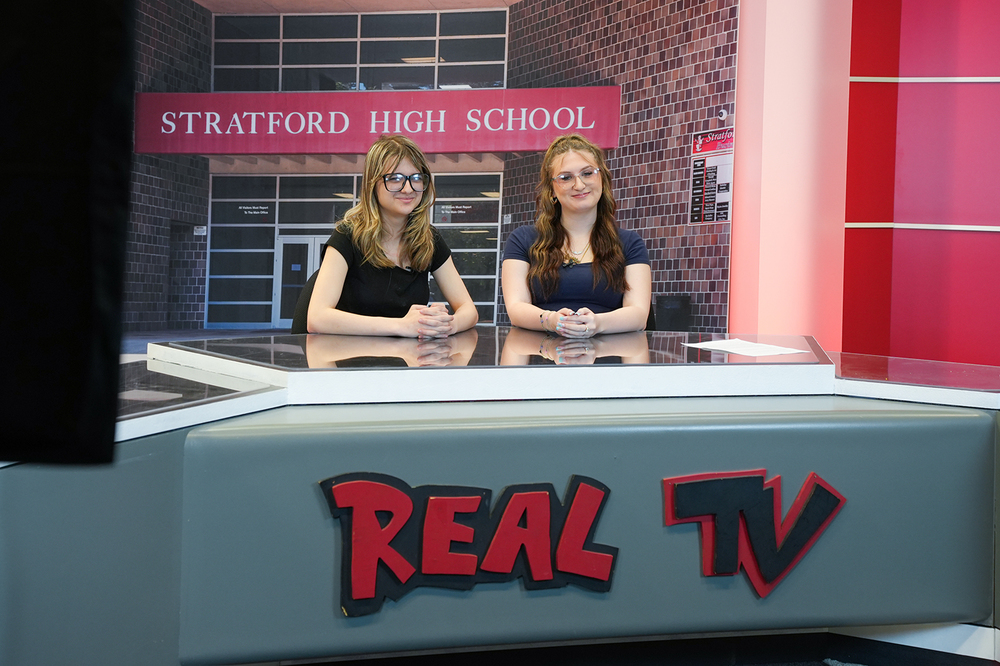
A typical day in Stratford High’s Media Tech program involves a lot of students moving in all sorts of directions.
Everybody is tackling something: they are writing scripts, planning news packages, setting up interviews with students and staff, editing videos – nobody is sitting idle.
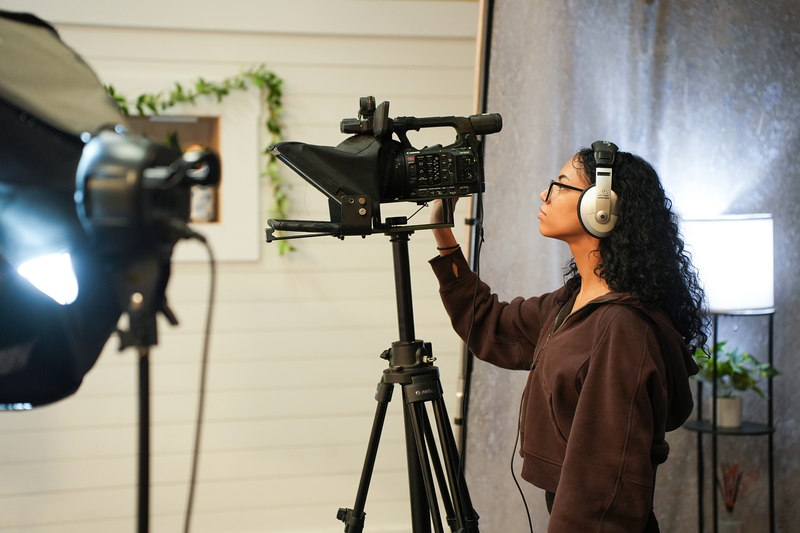
There are different aspects to what the students are learning about as they grow in the program: how to work a camera, lighting techniques to enhance a shot, and how to edit video, to name a few of the skills they have acquired. They are also learning about careers in the journalism field.
The students in the program are particularly known for producing the school’s news program, "Real TV." During the program, students cover the goings-on at their school – everything from news, to sports, to feature stories and beyond.
However, Stella McCombs wants her students to view "Real TV" as more than just an announcement show; she aims to get her students to answer the question: What is going to make people want to watch it?
Under their teachers’ tutelage, Media Tech is showing students how to start hustling now, so that they are better prepared to make moves in a fast-paced, ever-evolving industry when they complete high school.
The ‘Real’ story
“Real TV” has been bringing the goings-on to Stratford High students and staff since the 1990s. Stella McCombs took over the program in 2002.
McCombs is a graduate of Stratford High herself. She received her bachelor’s degree in journalism from the University of South Carolina and then went on to serve as a news producer at Live 5 for a couple of years.
McCombs transitioned to a completely different job working with student affairs at the Medical University of South Carolina. During her time there, she ran a summer program for high school students, helping them find job shadowing opportunities at MUSC. She was also working on getting her master’s degree in school counseling from The Citadel at the time.
The summer program she ran was eye-opening for McCombs, who really enjoyed working with the high schoolers, and when she started looking for school counseling positions, she actually found a listing for a Media Tech teacher at her alma mater.
“They were looking for someone who had some background in journalism,” she said. “I wasn’t too far removed from it at that time, so I started teaching and I just loved it.”
McCombs teaches Media Tech classes 2-4, while Jake Buck leads the Media Tech 1 class.
As they grow in the Media Tech classes, students go from learning basic camera operations to eventually running the “Real TV” program, a show that has previously garnered team and individual awards regionally.
The show is mainly led by the students in Media Tech 3 and 4. Each airing lasts anywhere from six to eight minutes, and Principal Brion Packett has allotted 10 minutes in the school’s bell schedule to allow everyone to watch it.
“Real TV” airs mainly Tuesdays and Thursdays; Wednesday and Friday are usually for Media Tech 2 students while Monday is a day for production to regroup. Buck’s students will start putting their skills to the test by creating their own shows usually toward the end of the semester.
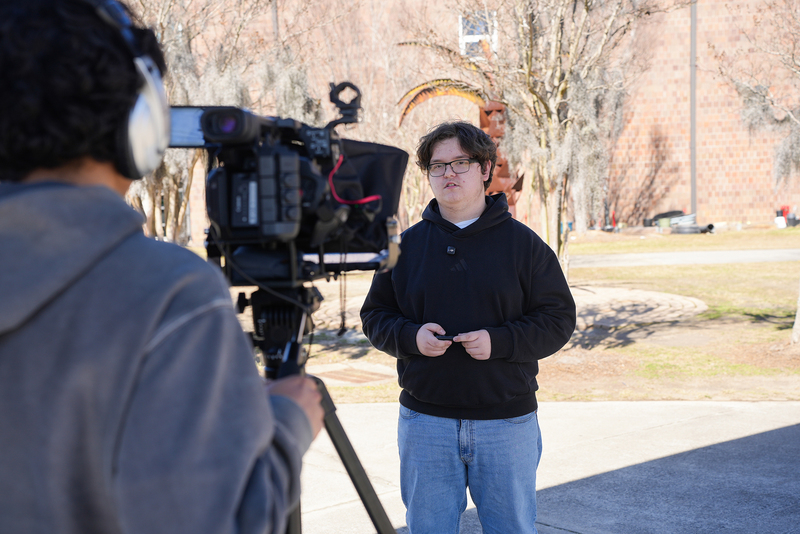
Students work by creating news packages, editing, and putting together different segments of the show. Students swap out positions every two weeks, allowing them the chance to try out different roles. Every show has two student producers – a position everyone will eventually experience – and anyone who wants to anchor will have the opportunity to do so (anchoring is a seemingly coveted spot – a lot of students said they like getting to anchor).
Twelfth grade service learning student Ashton Parker said he has developed a passion for anchoring and producing – specifically he enjoys getting to edit the show.
Parker said the show is vital to the school considering nowadays because “Real TV” is not only providing news to the school community, but also a little bit of entertainment. A newer segment is called “Classroom Cribs,” modeled off of MTV’s “Cribs,” during which teachers show off their decorated classrooms. Another segment is “Stratford Speaks,” during which students on the show will organize man-on-the-street interviews, an informal technique where reporters ask random people for their opinion on specific topics. The show fairly recently started reporting on the weather as well.
Parker named some of these segments as items that provide some comic relief.
“Sometimes it does not have to be big, important news, and it’s something kind of silly that kids can laugh at,” he said.
Parker said one of his favorite aspects of working on the show is that students are given creative freedom, and they are not just limited to sharing stories about Stratford. He referenced a story he helped put together when he took Media Tech 2; it was a news package on Monster Music & Movies, a record shop in West Ashley. The story focused on the influence of vinyl records, CDs and cassette tapes in the music industry.
“Those are the kinds of stories that I love the most – when people actually go outside of school to cover a story that nobody had probably done before,” he said.
Junior Media Tech 4 student Carolos Canales said he joined the class not knowing anything from editing to how to work a camera. He has since evolved, and now his favorite roles include anchoring/producing sports packages. For that reason, Canales encourages any Stratford student with an interest in journalism to get involved in the school’s Media Tech program.
“For someone who is trying to be out there and learn the basics, if you’re interested, this is something you should definitely do,” he said.
More than a show
While fun, it is not an easy A; students are graded on making sure certain criteria is included in every show or in every package they create.
Making deadlines is a big part of what McCombs teaches her students – and she will deduct points if students do not make deadline. As high schoolers, they get two weeks to work on a story package but, in reality, someone working on a daily news show would get only about six hours to finish their work. Students are also learning about teamwork and cooperation in a news room setting; if one person’s work falls through, then that affects everybody’s else’s work.
Part of their grade also comes from performing a service, such as making time outside of school to capture footage of sports and fine arts events. Students can also earn that grade by doing extra video edits.
Beyond the journalism and the video editing aspects, McCombs is also teaching her students the soft skills they need to be successful: time management and people/communication skills are probably the biggest lessons, a lot of which is learned when they set up interviews for news packages.
“They start out really apprehensive – especially when they have to talk to adults,” she said, adding, “I put most of that on them to set up interviews.”
Twelfth grade Media Tech 4 student Olivia Goods-Martin said she joined the class not expecting to move up, but has since come to describe it as a big family that is providing a service to the school. Goods-Martin usually helps produce or anchor the show.
“It (the class) helps you learn other skills that you don’t learn in other core classes – stuff that you can take to college and even a future career,” she said. “I would recommend for other people to take this class because it’s really fun and it helps you be a part of something for the school.”
Eleventh grade Media Tech 3 student Ella Ryan said because of her experience in the program, she is planning to go to Coastal Carolina University to study sports journalism.
Ryan said she also sees “Real TV” as being a vital part of Stratford; because of the student production, everyone is staying up to date on the goings-on in the Stratford community – and beyond.
Plus, it has helped shape her future for life after high school.
“I think it is one of the best choices I’ve made in high school,” Ryan said. “I will not regret taking this class.”